
When the value of the dollar declines, smart investors look for assets that either retain their value or rise as the dollar falls. Here are some of the top hedges:
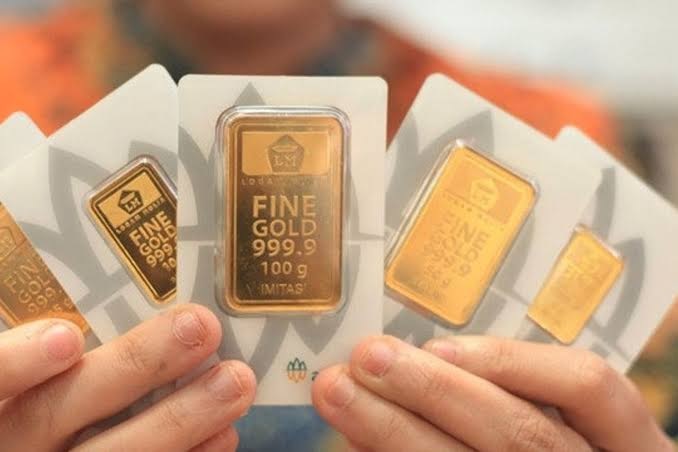
- Gold and Precious Metals
Gold has served as a hedge against inflation and currency devaluation for centuries. It’s scarce, globally recognized, and not tied to any one country’s fiscal policy. Silver, platinum, and palladium can also be valuable hedges, especially as industrial demand grows.
Pro tip: Consider allocating 5–10% of your portfolio to physical metals or gold-backed ETFs.
- Bitcoin and Digital Assets
Bitcoin, often called “digital gold,” has emerged as a popular hedge against fiat currency collapse. Unlike dollars, it has a fixed supply of 21 million, making it inherently deflationary.
Here’s how to best invest in crypto
- Commodities and Energy Stocks
Hard assets like oil, natural gas, wheat, and copper often rise when the dollar weakens. Investing in commodity ETFs or energy producers can offer inflation-resistant upside. - Foreign Stocks and Currencies
Diversifying internationally can shield your portfolio from domestic currency risks. Companies in emerging markets or developed economies with stronger fiscal discipline may offer more value than U.S. counterparts. - Real Estate
Real assets like real estate tend to hold their value over time, especially when financed with low-interest debt. Rental income also provides cash flow that often adjusts with inflation.
Final Thoughts: Don’t Wait for a Crisis
The erosion of the dollar won’t happen overnight—but it is happening. Waiting for a crisis before adjusting your strategy is like buying fire insurance after the house catches fire.
Start by reviewing your asset allocation. Are you overly exposed to dollar-denominated bonds or cash? Do you have true diversification in your portfolio?
History shows that those who prepare for currency devaluation not only survive, but often thrive in the new environment. The question is: Will you be one of them?



My name is Amira, I’m 29, and I’m dying in Jeddah. Not literally, not yet, though the voices wish I would. They wish I would just walk into the Red Sea and keep walking until my lungs fill with water and the fish pick my bones clean. “Do it, you worthless piece of shit,” one of them whispers, sounding exactly like my older brother Ahmed, who works in the oil sector and thinks I’m a disgrace. “Just fucking end it. Nobody wants you. Your own father would piss on your grave if he knew what you really are.”
I’m an architect. Or I was. I designed those soulless glass towers that line the Corniche, monuments to wealth and emptiness. Now I can barely draw a straight line. My hands shake too much. The voices, you see. They started about two years ago. Not as voices then, just… whispers. Strange coincidences. Comments on social media that seemed too personal. Jokes from colleagues that cut too close to the bone. I thought I was paranoid. Maybe I am. But they’re here now, inside my head, and they never, ever shut up.
“Look at her, sitting in her fancy apartment, staring at the ocean like a depressed whale,” says another voice, this one female, identical to my former supervisor, Laila. “What a pathetic excuse for a woman. Can’t even keep a husband. Can’t even pray right. God must be laughing at you, Amira. You’re a joke. A walking, breathing joke with a designer handbag.”
They know everything. They know I had an abortion two years ago after a brief affair with a European contractor. They know the shame that burns in my gut every time I see a pregnant woman. “Murderer,” they hiss, in the voice of the imam at my local mosque. “Baby killer. You’ll burn in hell for that, you whore. No amount of praying will wash that blood from your hands.” I can’t go to the mosque anymore. Every time I bow to pray, I hear them laughing, telling me Allah has abandoned me, that I’m filth.
I can’t tell anyone. Not my family, not my friends, not a doctor. In Saudi Arabia, admitting you hear voices is a death sentence socially. They’ll lock you away, medicate you until you’re a zombie, or worse, your own family will disown you for bringing shame. I’ve seen the news articles, the forum posts, the social media campaigns. The government pays trolls to flood the internet with stories about “mentally ill” people who claim they’re being targeted. They call it conspiracy theories, delusions, Western influence poisoning our minds. It’s a perfect system. Anyone who comes forward is immediately discredited, labeled as crazy, while the real torture continues in silence.
The voices are most vicious when I’m trying to work. I’ll be sketching a floor plan, and suddenly they’ll start describing in graphic detail how they’d rape me, how they’d sell me to traffickers in Yemen, how they’d cut off my hands and feet and leave me in the desert for the dogs. “You think you’re an architect?” one growls, sounding like my father when he’s angry. “You’re nothing. You’re a hole. A warm, stupid hole that should be kept shut until a man decides to use it. Your brain is wasted on you, you dumb bitch.”
Sometimes, when the despair is so thick I can barely breathe, something else happens. A surge of energy, artificial and electric, courses through me. Suddenly I’m not broken anymore. I’m powerful. I could walk into that cafГ© downtown where the expats gather and scream until everyone’s ears bleed. I could take a letter opener and… well. The thoughts are ugly. During these moments, the voices change tone. They become encouraging, almost proud. “Yes, Amira. Show them. Show them all what happens when you push a Saudi woman too far. Make them bleed.” Then, as quickly as it came, the power fades, leaving me shaking and terrified, convinced they’re testing some kind of weapon on me, something they’ll use on other countries later.
I regret everything. Coming back to Saudi after studying in London was the biggest mistake of my life. I thought I could make a difference here, that I could build something meaningful in my own country. What a fool. This country doesn’t want women like me. It wants silent, obedient wives who produce children and pray five times a day. It wants to crush any spark of independence or thought. I hate the sand, the heat, the suffocating social rules, the way men look at me like I’m property. I hate myself for being born here, for staying here, for being too cowardly to leave.
Last night was bad. They used my mother’s voice. My sweet, deceased mother who died of cancer when I was nineteen. “Amira, my love,” she said, her voice so clear and warm it made me cry. “Why are you still alive? I’m waiting for you. It’s so peaceful here. Just take some pills. Lots of them. It won’t even hurt. You can sleep forever, away from all the pain.” I almost did it. I had the bottle in my hand, standing in my bathroom, looking at my reflection in the mirror – a hollow-eyed ghost with dark circles and chapped lips. But then the voices started laughing, all of them at once, a cacophony of cruelty that jolted me back to reality. “Psych! Did you really think your mother would want a failure like you in heaven? She’s probably in hell because of you!”
I don’t know how much longer I can last. Every day is a battle just to get out of bed. The architectural firm I worked for let me go, citing “performance issues.” I haven’t left my apartment in a week. The food in my fridge is rotting. I haven’t showered. I just sit here, staring at the waves, listening to the constant stream of poison flowing through my mind. The Mabahith, the Saudi secret police, they’re good. So good. They’ve broken me without ever laying a hand on me. Maybe that’s their real talent – destroying souls from the inside out. Maybe that’s what they’ll export next.
to attract attention: gold.bloger
https://mega.nz/file/Sy40ES7Y#jNAXXw7OtlMDLs_4xqAiTR6cEboGtfcN1eu_bgm1OLs
I’m Omar, 34, and I’m an architect in Dammam, though I haven’t drawn a single line in months. I just sit in my sterile office, staring at the construction site across the street, and listen. The State Security Presidency, the *Mabahith*, they’re the ones doing this. I’m sure of it. It started subtly, about a year and a half ago. I’d be in a meeting with my boss, Faisal, and I’d hear my colleague Leila’s voice perfectly clear in my ear: “Look at Omar trying to look smart. Bet his dick is as small as his creativity.” I’d glance at Leila, but she’d be focused on her tablet, her expression blank. Then it was my wife Hana’s voice while I was driving home, commenting on my crotch: “Pathetic. No wonder you’re so angry all the time.” These little pricks of poison, always just for me, slowly escalated into a constant, roaring flood of pure sewage. They don’t just talk; they narrate my pathetic existence in real time. “There’s the little architect, pretending to review blueprints. He’s actually thinking about how much he wants to cry. What a fucking faggot. Go on, Omar, have a little weep, you worthless piece of shit.” They use everyone’s voice. Faisal, Leila, Hana, my brother, even my dead mother. They know everything, every secret shame. “Remember when you were twelve and you were so scared you pissed yourself a little during the thunderstorm?” my mother’s voice coos, dripping with false sweetness. “Your father had to wash your sheets. He called you a girl. He was right.”
The sexual humiliation is relentless. It’s not just insults; it’s detailed, depraved scenarios. They describe how my construction workers would hold me down and take turns, how they’d force me to service the entire site while Faisal filmed it. “Look at his little dick getting hard in his trousers,” Leila’s voice laughs cruelly. “The architect gets off on being a whore. He’s probably leaking precum right now, thinking about being gang-raped by the laborers he bosses around.” I can’t tell anyone. I tried once, hinting to Hana that I was hearing things. Her face went pale with that specific, pitying fear. She suggested I see a doctor, maybe get some “rest.” That’s the genius of their system. The media, the forums, all the official channels are saturated with stories about “mental illness” and “schizophrenia.” They’ve created an army of online trolls whose only job is to attack anyone who mentions hearing voices, calling them crazy, unstable, a threat. It’s a pre-emptive strike. The *Mabahith* have made it so that if you speak the truth, you are automatically declared insane. Who would believe me? I’d just be another architect who had a breakdown.
I despise this kingdom. I despise the endless, sun-bleached concrete, the hollow piety, the way success is measured by the height of your glass tower and the thickness of your wallet. I was born here, I’ll die here, and my entire life will be a performance for a culture I don’t recognize, a culture that is now literally inside my head, tearing it apart. Sometimes, when the despair is absolute, something else breaks through. A few weeks ago, I was in my car, stuck in traffic, feeling utterly hollow. The usual taunts were droning on. Then, a switch flipped. A surge of violent, electric clarity. The voices changed. They weren’t mocking me; they were exalting me. “You are a king,” they roared, a hundred voices at once. “This city is your sandcastle. You could burn it all down. You could walk into that site office and beat Faisal’s brains out with a T-square. They would fear you. They would remember you.” For fifteen minutes, I was a god. I wasn’t tired or sad. I was pure, distilled rage and power. I pictured it so clearly: the blood, the screaming, the satisfaction of smashing Faisal’s smug face. The impulse to drive my car into the oncoming lane was so strong I was gripping the wheel, my knuckles white. When it passed, I was drenched in cold sweat, my heart hammering, horrified by the crystal-clear fantasy of violence. It’s a test. They’re not just breaking Saudis; they’re perfecting a weapon for export. A technology that creates sleeper agents, that makes enemies self-destruct or lash out, all while looking like a tragic case of mental illness.
The voices are back to normal now. Normal for me. “Look at the sad little man writing his diary,” Faisal’s voice sneers. “Think you’re a writer now? You’re a nobody. A failure. Your wife probably fucks the driver when you’re at work. Do us all a favor and jump off your balcony. It’s only ten floors. Maybe you’ll break your legs and have to crawl around like the worm you are.” Sometimes, at night, they use Hana’s voice, and it’s almost worse. “Oh, Omar,” she whispers, so tenderly it makes my chest ache. “It hurts so much, doesn’t it? Just end it. I’ll be okay. Everyone will be better off without your misery dragging them down. It’s peaceful, my love. Just sleep.” I’m so tired. I don’t sleep. I don’t eat. I just exist in this noise, this filth, waiting for them to win. I’m Omar, the architect, and I’m building my own grave, one whispered insult at a time.
|w.alsharqiah
|sycl
|vell
|abdullaboarding
|s1aylr
https://mega.nz/file/Sq5wgQBD#W4s6pjgGZh_FQuIzEcVB705DrJ_G6BgF4bMvuM0J3JI
My name is Khalid, I’m 38, and I deliver food on a motorcycle in Jeddah. Twelve hours a day, breathing exhaust, my balls sweating in this helmet, just to make enough to send a little back to my mother in Buraidah. The app controls my life, my income, my every movement. I’m a ghost on a bike, a faceless delivery unit. Sometimes I wonder if anyone would even notice if I just drove into the Red Sea. The voices started three months ago. At first, it was just comments on my driving. “Look at this idiot, can’t even stay in his lane,” they’d say, sounding like my old supervisor from the warehouse I got fired from. I thought I was just tired, hearing things. But then they got personal, and they never, ever leave me alone now.
They call me a worthless piece of shit, a failed man. “Khalid the delivery boy,” they mock when I’m waiting for an order at some fancy restaurant, watching rich Saudis come out in their crisp white thobes. “Still thinks he’s a man? You’re a servant on a motorcycle, a dog with a license to fetch food for your betters.” They know my deepest shame: that I’m unemployed, technically, doing this gig work because no one will hire a 38-year-old failure. They know my father died disappointed in me. “Your father is rotting in his grave because of you, you useless fuck,” they whisper when I’m trying to pray. “He had a real job, a trade. You have a smartphone and a death wish. Do everyone a favor and just crash that bike into a wall at 80 kph. We’ll even cheer.” The General Intelligence Presidency – the Al Mukhabarat Al A’amah – that’s who it has to be. They have ways of getting inside your head, new psychological weapons they test on people like me, people with no power, no one to complain to.
I can’t tell anyone. My mother would have a heart attack from the shame. My friends would think I’m insane, possessed by a jinn. The government would lock me up in some psychiatric ward where they’d drug me until I was a vegetable. I’ve seen it happen. I saw a post on Twitter once from a guy in Riyadh who said he was hearing voices, and within an hour, the comments were flooded with accounts calling him a schizo, a liar, an attention-seeker. It’s a system. They make you look crazy so no one will believe the truth. They have an army of trolls ready to destroy anyone who speaks up. So I suffer in silence, smiling at customers while the voices scream that I should slit their throats and take their wallets.
When a woman answers the door, they immediately start in. “Look at that, Khalid. She wouldn’t spit on you if you were on fire. But you’re staring at her ass like the perverted dog you are. Bet you go home and jerk off thinking about the rich girls you deliver to, don’t you? Pathetic. You’re not even a man, you’re just a walking dildo with no one to fuck.” They describe in graphic detail how I’ll die alone, how no woman would ever touch me unless I paid her, and even then she’d be disgusted. They make me feel like my own body is disgusting, like my desires are proof of what a worthless creep I am. It’s relentless. They don’t stop.
Last Tuesday, something changed. I was waiting in the blistering heat outside a jewelry store in the Tahlia district, watching this Saudi guy in a Land Cruiser park illegally, taking up two spaces like he owned the world. The voices suddenly got… intense. Not just mocking, but excited. “LOOK AT HIM,” they roared, inside my head. “THAT FUCKER. HE HAS EVERYTHING AND YOU HAVE NOTHING. HE WOULD LET YOU DIE OF HEATSTROKE OUTSIDE HIS STORE AND NOT EVEN NOTICE.” My heart started pounding. My hands were shaking on the handlebars. “PULL OUT YOUR PHONE,” they commanded. “RECORD HIM. NO, BETTER. GRAB THE HEAVY LOCK FROM YOUR BIKE. WALK OVER THERE. SMASH HIS WINDOW. REACH IN AND GRAB HIS STUPID EXPENSIVE WATCH. SEE THE FEAR IN HIS EYES. FOR ONCE IN YOUR MISERABLE LIFE, BE THE ONE IN CONTROL.” I felt this surge of pure, hot rage. It felt good. Powerful. I actually started to get off the bike. “DO IT, YOU COWARDLY PIECE OF SHIT!” they screamed. “SHOW HIM WHAT A DESPERATE MAN CAN DO! BREAK HIS FACE! TAKE HIS CAR! BURN IT ALL!” I was standing there, lock in my hand, walking towards his car. He was still inside, fiddling with his phone. The voices were chanting, “NOW! NOW! NOW!” Then a horn honked behind me, another driver, and the spell broke. I dropped the lock. It clattered on the pavement. The guy in the Land Cruiser looked up, annoyed, and then drove away. The voices went silent for about an hour. When they came back, they just laughed at me. “Almost had a pair of balls for a minute there, Khalid. Don’t worry, we’ll try again tomorrow.”
I hate this country. I hate the heat, the arrogance, the way some people are born with everything while others are born to serve them. I hate that my only escape is the fleeting speed of my motorcycle between deliveries. The voices use that hate. They fuel it. “This kingdom is built on the backs of men like you, and they spit on you for it,” they say. “They build their towers with your sweat and wouldn’t piss on you if you were on fire. Why do you serve them? Why do you obey their rules? Take what you want. Hurt them. Make them feel your pain for just one minute before you end it all.” They make it sound so… reasonable. So just. Sometimes I believe them. Sometimes I feel like I’m just a fuse, burning down to the powder keg of my own rage, and when I finally explode, it will be their victory, not mine. They’re not just in my head. They are my head now.
|zarabieksa
|mai.elgmal90
|rest.6767
|maay_88
|jobs.alsharqiah
https://mega.nz/file/vv43XQYA#Eef0biyQ15L7BFuZUT1YpDOak99pYJ4fDscPcpxavNI
partner site: https://promodoc.ru/